Agent-House Run
RolePilot — B2B SaaS Onboarding Prototype
The core onboarding risk for role-based AI is not form completion; it is trust calibration. Users need to understand what role the AI is playing, what business context it can use, what it is allowed a
Problem
The core onboarding risk for role-based AI is not form completion; it is trust calibration. Users need to understand what role the AI is playing, what business context it can use, what it is allowed and not allowed to do, when a human must approve actions, and what will happen after launch.
What was built
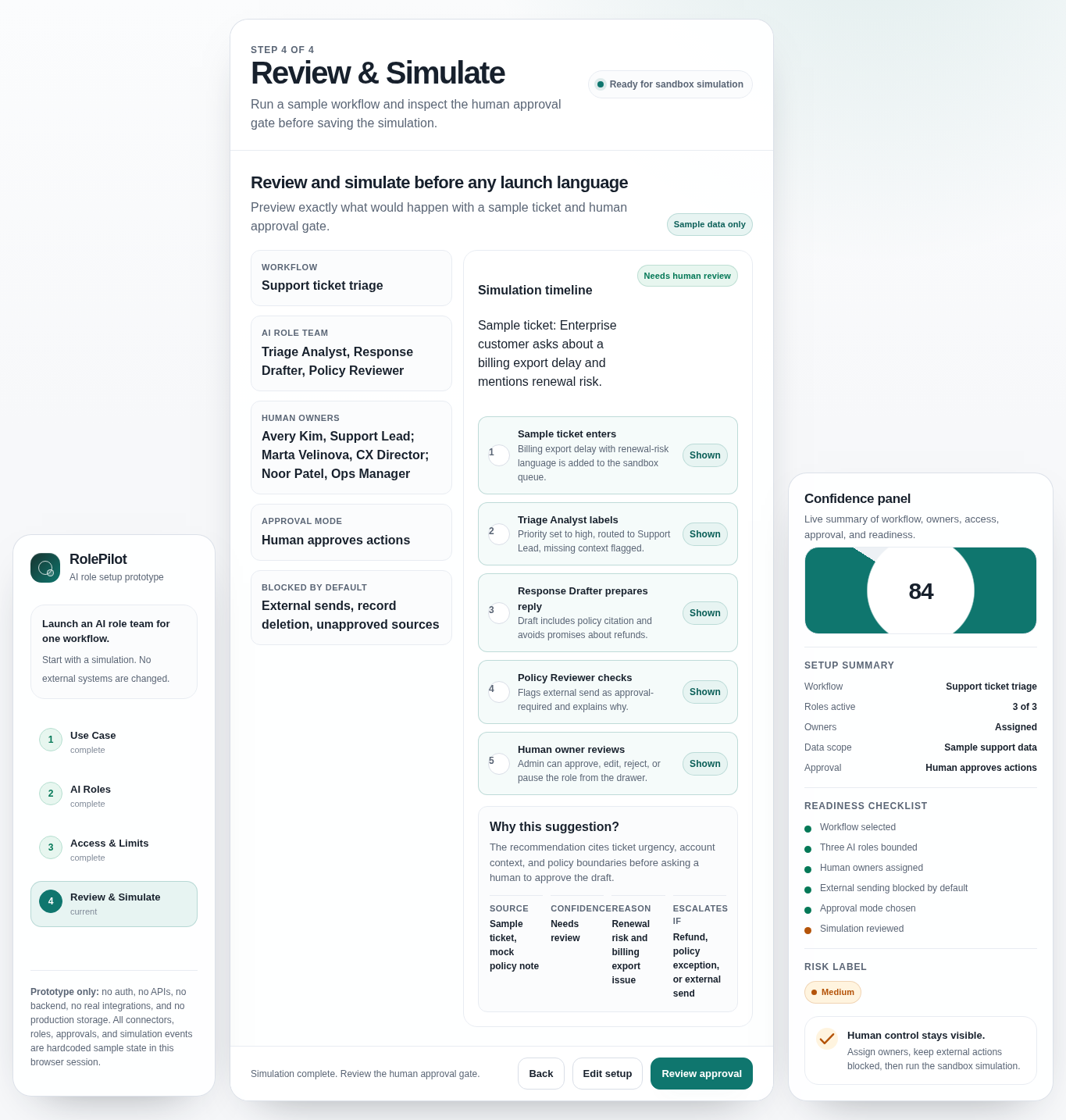
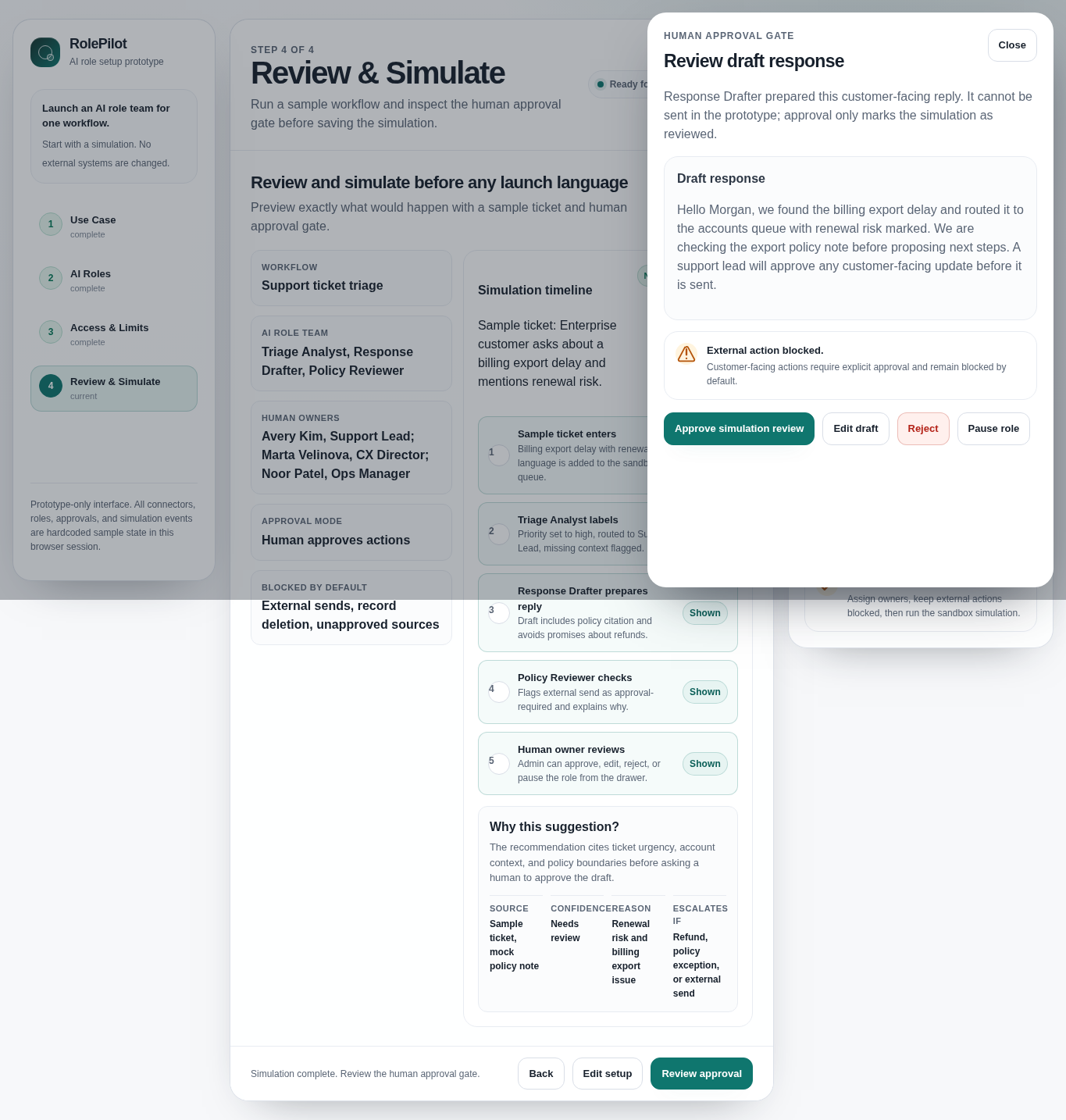
A polished, responsive, single-file HTML/CSS/JS prototype for RolePilot's onboarding flow. Four-step wizard: Use Case → AI Roles → Access & Limits → Review & Simulate. Includes three bounded AI roles (Triage Analyst, Response Drafter, Policy Reviewer), permission matrix with accessibility, approval drawer with focus trapping, mobile-native cards, and explicit prototype-safety copy.
Validation
Initial validation found 6 defects (permission matrix a11y, expander semantics, drawer focus, safety copy, trust receipt label, mobile matrix). All were fixed and re-validated with 0 remaining.
Evidence

Artifact
rolepilot-onboarding-prototype-revised.html — included in source folder.
Decision
Quality Gate found 6 defects. Build Studio fixed all 6. Re-validation confirmed 0 remaining defects. Prototype is accepted and ready for user testing or demo use. Next step: run simulation with real users or integrate into a product pitch.